Understanding the Difference Between Traditional Commerce and E-Commerce
The world of commerce has evolved dramatically in recent decades. With the rise of the internet, businesses and consumers alike have increasingly embraced e-commerce as a complement—or alternative—to traditional commerce. But which one is best for your business needs? How do they differ in terms of approach, medium, and business type suitability?
This blog is here to break it all down for you, explore the nuances between the two models, and help you determine how to leverage either (or both) depending on your goals. Whether you’re a physical store owner, contemplating a switch to e-commerce, or planning to begin your entrepreneurial venture, this guide will provide valuable insights.
What is Traditional Commerce?
Traditional commerce refers to the conventional way of buying and selling goods and services that we have known for centuries. This form of commerce typically requires in-person interactions between customers and businesses at physical locations. Examples include retail stores, farmers’ markets, shopping malls, and trade fairs.
Key Features of Traditional Commerce:
- Physical Presence
Transactions occur in physical spaces such as stores, shops, or marketplaces.
- Limited Reach
Foot traffic, geographic proximity, and store hours dictate customer accessibility.
- Tangible Interactions
Customers can see, touch, and evaluate products before making a purchase, fostering trust and satisfaction.
- Time Constraints
Traditional commerce operates within set business hours, limiting when transactions can occur.
- Instant Gratification
Purchases are often completed on the spot, with customers leaving with the product immediately.
Who Should Leverage Traditional Commerce?
Traditional commerce is best for businesses that rely on tangible customer experiences, local communities, or in-store service. Examples include small retail boutiques, bakeries, beauty salons, or businesses offering personalised, hands-on customer care.
If your target market values the ability to touch, try, or sample products, traditional commerce will be a key resource in your strategy. Clothing stores, high-end jewellery shops, and grocery stores often thrive in this environment.
What is E-Commerce?
E-commerce, or electronic commerce, refers to the buying and selling of goods and services online. Conducted through websites, mobile apps, or social media platforms, e-commerce has revolutionized how transactions take place, creating a virtual marketplace accessible 24/7.
Key Features of E-Commerce:
- Digital Platform
Everything—from showcasing products to completing transactions—is done on digital platforms such as websites or apps.
- Global Reach
Businesses can reach consumers worldwide, surpassing geographical barriers.
- Convenience
Customers can shop anytime, anywhere, without being limited by business hours or location.
- Advanced Analytics
E-commerce platforms provide detailed customer insights, helping businesses tailor their offerings and marketing efforts.
- Variety of Payment Options
Digital stores often allow multiple payment methods, such as debit/credit cards, e-wallets, and even cryptocurrencies.
Who Should Leverage E-Commerce?
E-commerce is ideal for businesses aiming to scale quickly, reach a larger audience, or cater to tech-savvy customers. Examples include digital product businesses (ebooks, software), home goods brands, subscription services, and startups looking to enter the market without major initial investment in physical infrastructure.
If your consumers value convenience, fast service, and a wide selection of products, e-commerce should form the foundation of your strategy.
Key Differences Between Traditional Commerce and E-Commerce
To help you better understand where both differ and how to effectively utilise each, here’s a detailed comparison:
Aspect | Traditional Commerce | E-Commerce |
|---|---|---|
Medium | Physical stores, face-to-face interactions | Websites, mobile apps, social media platforms |
Reach | Limited to geographic location | Global customer base |
Operating Hours | Fixed business hours | Open 24/7 |
Customer Experience | Hands-on, sensory interaction with products | Visual themes, descriptions, and user reviews |
Overheads | High (rent, utilities, staff wages, inventory storage) | Lower (hosting fees, digital ads, fewer physical requirements) |
Inventory | Stored in physical locations | Can involve warehouse fulfilment or dropshipping |
Marketing Channels | Localised marketing (flyers, radio, word of mouth) | Digital marketing (SEO, PPC ads, email campaigns) |
Transaction Speed | Instant in-store payments | A mix of self-checkout and shipping delays |
When to Combine Traditional Commerce and E-Commerce?
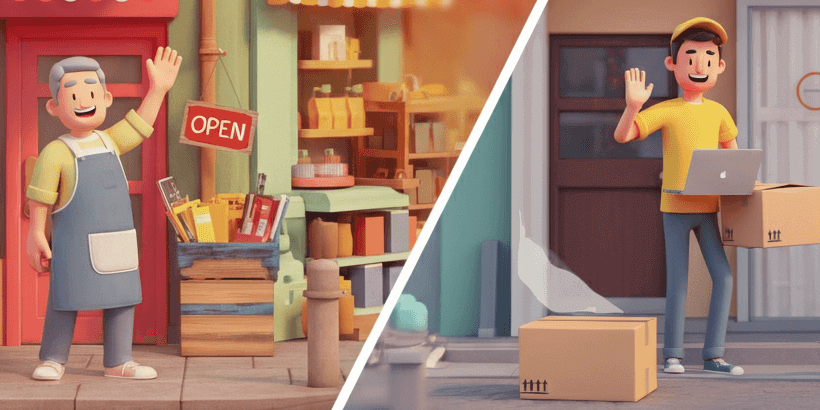
For many businesses, the best strategy is not choosing one over the other but integrating both to build a hybrid model. This approach, often referred to as “omnichannel commerce,” offers the flexibility of e-commerce paired with the personal touch of traditional commerce.
Benefit of a Hybrid Model:
- Broader Customer Reach
By maintaining a physical store for local clients and an online presence for distant customers, you tap into both channels effectively.
- Improved Customer Experience
Offer customers the choice to buy online and pick up instore (BOPIS), enhancing convenience and satisfaction.
- Brand Visibility
A consistent experience across digital and physical channels builds better brand loyalty and awareness.
Take, for example, a brand like IKEA. Customers can visit their brick-and-mortar stores to experience products or conveniently shop online via their app or website.
Tips for Choosing the Right Model (or Both)
To determine the right fit for your business, consider these factors:
1. Know Your Target Audience
Are your customers tech-savvy online shoppers or traditional buyers who value in-store experiences? Study customer demographics thoroughly.
2. Assess Your Resources
Do you have the budget for a physical location, or would starting with an online store be more feasible? E-commerce may require lower start-up costs, but scaling may involve investment in digital marketing.
3. Analyse Your Products
Products that benefit from sensory experiences (e.g., fashion, furniture) may perform better in traditional settings, while digital goods or home-delivered products can thrive online.
4. Consider Market Trends
Watch industry trends to see which platforms are growing. E-commerce saw unprecedented growth during the pandemic, but physical stores are making a comeback as consumers crave an omnichannel retail experience.
Why Choose Just One When You Can Have Both?
Ultimately, the best approach to commerce is one that aligns with your business model, customer expectations, and long-term goals. By combining traditional commerce’s personal touch with e-commerce’s convenience and global reach, businesses have the upper hand in creating meaningful, lasting connections with their customers.
If you’re exploring ways to merge these models into your business strategy or still undecided about where to begin, start taking small steps. First, invest in a simple website for your physical store, or incorporate live customer chats into your e-commerce platform to replicate the in-person experience. Need expert guidance? Connect with Mind Frame India, Mumbai’s trusted advertising, digital marketing and branding agency, to help you craft the perfect strategy for your business. Reach out today and take your first step towards a seamless blend of traditional and digital commerce!
.
Success lies in adaptability and customer-centred thinking.