


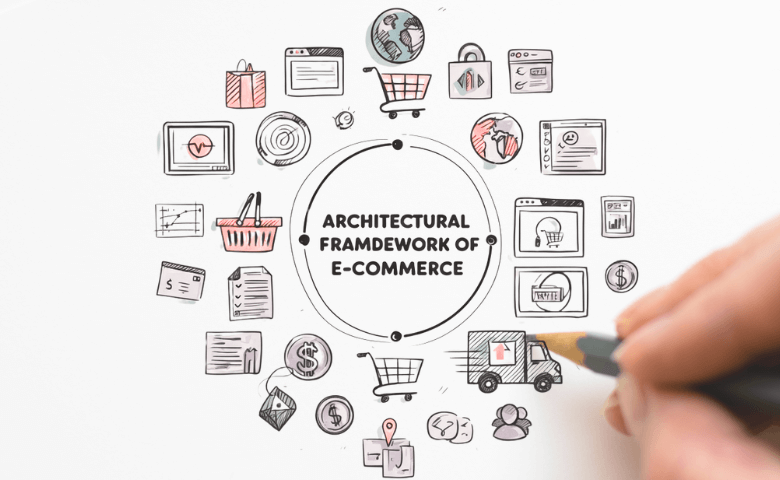
The Complete Guide to the Architectural Framework of E Commerce
E-commerce has transformed the way businesses operate and consumers shop. But behind every seamless online shopping experience is a robust architectural framework that makes it all possible. If you’ve ever wondered how an e-commerce platform works or are looking to develop one yourself, understanding this framework is key.
This guide dives deep into the architectural framework of e-commerce, exploring its components, types, and their vital roles. Whether you’re a developer, entrepreneur, or tech enthusiast, by the end of this blog, you’ll have a solid grasp of how e-commerce frameworks power the digital economy.
What Is the Architectural Framework of E Commerce?
An architectural framework in the context of e-commerce serves as the structural backbone of any online platform. It encompasses a combination of technologies, workflows, and processes that enable online stores to operate efficiently. From product catalogues and payment gateways to inventory management systems and analytics, it all ties back to this framework.
Why Is It Important?
The architectural framework of e-commerce is more than just a tech necessity. A well-designed framework ensures:
- Seamless user experiences, from product browsing to checkout
- Stability to handle high traffic during peak shopping times
- Security for safe transactions and data protection
- Scalability to grow alongside your business
Now that we understand its importance, let’s look at its key components.
The Key Components of an E Commerce Framework
1. Front-End Framework
The front-end is what customers interact with on an e-commerce platform. It includes components like the website design, interactive features, and user interface (UI).
Key Features:
- Responsive Design ensures a seamless experience on desktop, mobile, and tablet devices.
- Search and Navigation tools help customers quickly find products.
- Product Pages showcase items with details, images, and customer reviews.
- Shopping Cart allows users to easily add, remove, or modify product quantities before checkout.
2. Back-End Framework
The back-end is the engine that powers the entire operation. It handles all the processes that users don’t see, such as inventory updates, order processing, and payment handling.
Key Components:
- Database Management for storing product details, user information, and order records.
- Order Processing Systems to ensure real-time updates and notifications for users.
- Payment Gateways for secure transactions, integrating options like PayPal, Stripe, and credit card processing.
- Content Management Systems (CMS) enable businesses to update their websites without coding knowledge.
3. Integration Layer
E-commerce doesn’t function in isolation. It depends on integrations with third-party systems to expand functionality and improve efficiency.
Example integrations include:
- Customer Relationship Management (CRM) tools to manage customer data and interactions.
- Enterprise Resource Planning (ERP) for supply chain, inventory, and finance management.
- Marketing Automation tools like Mailchimp for personalised email campaigns.
4. Security Infrastructure
E-commerce platforms deal with sensitive customer data, so security is non-negotiable.
Key security measures include:
- SSL Certificates for encrypting data transfers and securing transactions.
- Firewalls and Malware Protection to prevent cyberattacks.
- Customer Data Privacy Compliance with GDPR or CCPA rules.
5. Analytics and Reporting
Analytics provide businesses with key insights about customer behaviour, transaction trends, and website performance.
Tools like Google Analytics or built-in dashboards help track:
- Conversion rates
- Cart abandonment rates
- Customer purchase patterns
These insights guide better decision-making and drive sales.
Types of Architectural Frameworks in E Commerce
E-commerce platforms can follow different architectural models depending on business needs. Here are the most popular ones:
1. Monolithic Architecture
How It Works:
This is a traditional framework where all e-commerce processes, from product listings to payment processing, are tightly integrated into a single ecosystem.
Strengths:
- Simple to develop and deploy
- Cost-effective for small businesses
Drawbacks:
- Hard to scale as the business grows
- Limited customisation options
2. Microservices Architecture
How It Works:
This modern framework breaks down functionalities into standalone microservices. Each service, like inventory management or payment processing, operates independently but communicates with others.
Strengths:
- Scalable and highly flexible
- Easier to update individual components
Drawbacks:
- Requires skilled developers
- Can be costlier to implement
3. Headless Architecture
How It Works:
With a headless framework, the front-end (UI) is entirely decoupled from the back-end processes. Brands can create customised front-end experiences while leveraging powerful back-end tools.
Strengths:
- Total design flexibility
- Ideal for omnichannel businesses
Drawbacks:
- Complex implementation
- Higher costs for infrastructure
Benefits of Using a Robust E Commerce Framework
Here’s why investing in the right framework pays off for businesses:
- Enhanced Customer Experience: Smooth navigation, fast loading speeds, and intuitive design keep users coming back.
- Boosted Operational Efficiency: Automation and streamlined processes reduce manual workloads.
- Faster Time to Market: Pre-built features and integrations mean quicker deployment.
- Improved Brand Trust: Secure frameworks protect customer data and enhance credibility.
Building an E Commerce Framework for Your Business
If you’re ready to develop or refine your e-commerce platform, follow these steps to set yourself up for success:
- Define Your Business Goals: Identify the features you need based on your target audience and industry.
- Choose the Right Platform: Platforms like Shopify, Magento, and WooCommerce offer varying degrees of flexibility.
- Optimise for Mobile: Over 70% of e-commerce traffic now comes from mobile devices, so mobile-first development is key.
- Focus on Performance: Use tools like content delivery networks (CDNs) to ensure your site loads quickly, regardless of traffic spikes.
- Test Frequently: Performance testing, user testing, and security assessments should be part of your approach.
Leveraging the Right Tools
Several tools cater to different aspects of an e-commerce framework. Here are top picks to supercharge your efforts:
- BigCommerce and Shopify for quick and user-friendly store setups.
- Zapier and MuleSoft for seamless integrations of third-party tools.
- Outwrite or Grammarly for polished content and error-free copywriting.
Take the First Step in Building Your E Commerce Framework
Developing an effective architectural framework for e-commerce is crucial for long-term success. Whether you’re building a platform from scratch or enhancing your existing operations, understanding the key components and choosing the right structure is the first step. If you need any assistance regarding e-commerce you may contact us.
The future of e-commerce is evolving every day, and with the right tools and strategies, your business can thrive in this dynamic market. Start exploring platforms and frameworks today, and make informed decisions to stay ahead of the competition.



zimerov ertover
I needed to put you that tiny note to finally thank you so much over again on the splendid methods you have documented in this case. It’s certainly strangely open-handed with people like you to make extensively precisely what many people would’ve distributed as an electronic book to make some cash for their own end, certainly since you could possibly have done it if you considered necessary. Those basics also acted to be a fantastic way to comprehend some people have the identical passion similar to my personal own to know a lot more pertaining to this condition. I believe there are some more enjoyable opportunities up front for those who view your blog.